What role does ad copy play in Google Ads click-through rates?
The Power of Words in Paid Search
When it comes to Google Ads, you have only a few lines of text to capture someone’s attention, spark curiosity, and persuade them to click. That’s where ad copy becomes a game-changer. While targeting, bidding, and budget strategies are crucial, your ad copy directly determines how many people stop scrolling and actually engage.
Click-through rate (CTR) is more than a metric—it’s a reflection of how well your ad resonates with searchers. High CTRs can improve your Quality Score, lower your cost per click, and maximize your ad’s visibility. For small businesses and established brands alike, mastering ad copy is the bridge between impressions and conversions.
Understanding Click-Through Rate (CTR)
Before diving into how ad copy affects CTR, let’s understand what this metric truly measures. CTR is the percentage of people who see your ad and decide to click on it. It’s calculated by dividing clicks by impressions and multiplying by 100.
For example, if your ad received 50 clicks and 1,000 impressions, your CTR is 5%. While that number might seem simple, it tells a story about your audience’s engagement and your ad’s relevance.
CTR matters because:
- It reflects how well your ad message aligns with user intent.
- It affects your
Quality Score, a Google metric that influences ad rank and cost.
- It indicates whether your targeting and messaging strategy are working.
In short, CTR is both a performance indicator and a reflection of your ad copy’s strength.
Why Ad Copy is the Heart of CTR
Even with perfect targeting, poor ad copy can sabotage performance. Your ad text is your only opportunity to speak to potential customers before they decide whether to visit your site—or your competitor’s.
Effective ad copy bridges intent with solution. When someone searches for “emergency plumber near me,” they’re not looking for clever slogans—they want reassurance that you’re available now, trustworthy, and capable.
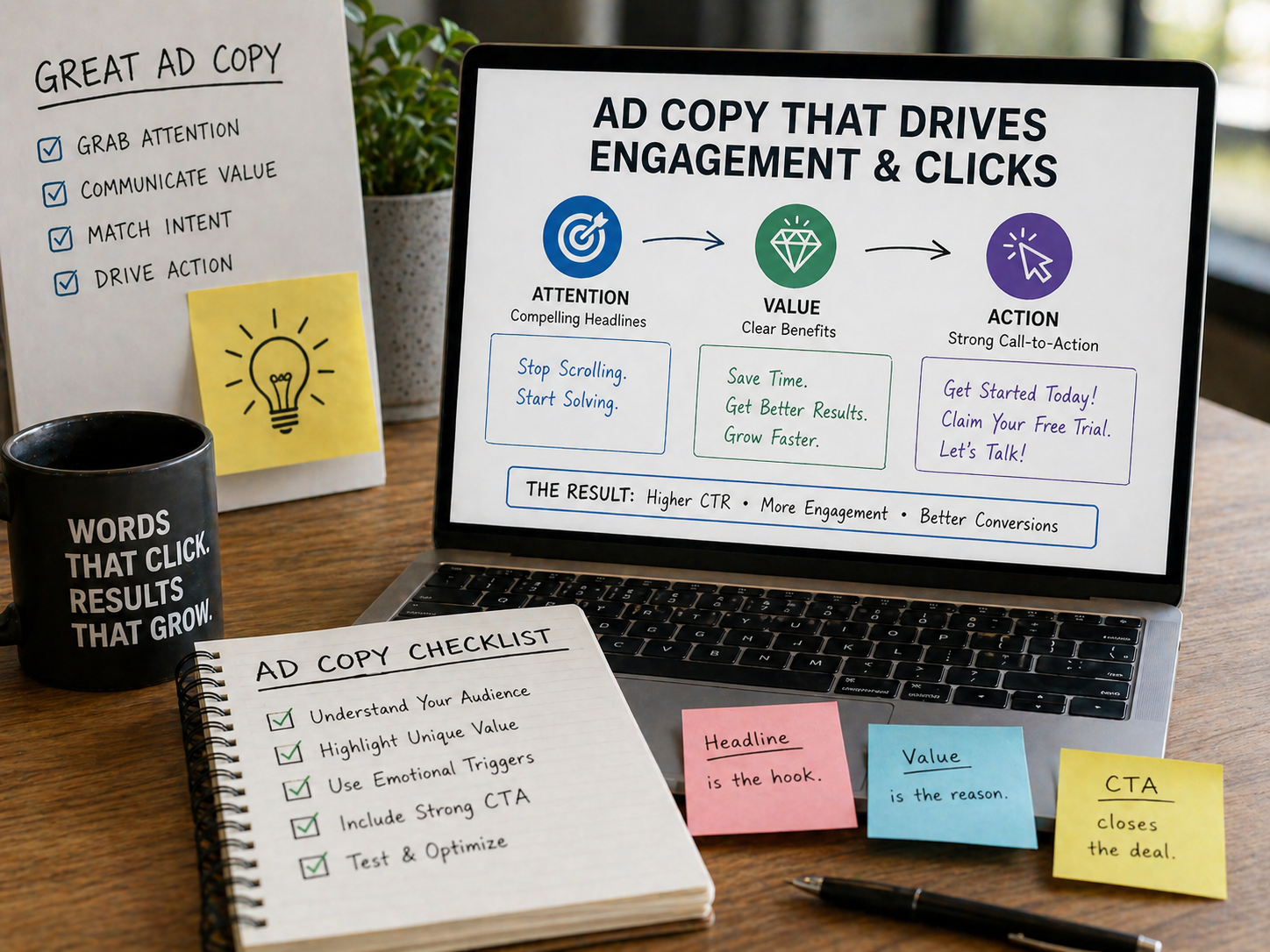
Strong ad copy communicates:
- Relevance: Aligning your message with the searcher’s intent.
- Value: Why they should choose your business.
- Action: Encouraging users to click immediately.
Your words should not only attract attention but also deliver a clear promise that clicking will solve their problem.
Crafting Compelling Headlines
Headlines are the first—and sometimes only—thing users notice. Google allows up to three headlines in most ad formats, and they often determine whether a user reads the rest.
To write headlines that improve CTR:
- Use your keyword early. Reinforce relevance by mirroring the search query.
- Highlight benefits, not features. “Save 20% on Roof Repairs Today” performs better than “Experienced Roofing Contractors.”
- Add urgency. Phrases like “Call Now,” “Same-Day Service,” or “Offer Ends Soon” encourage quick action.
- Test variations. Try emotional, factual, or curiosity-driven headlines to see which resonates most.
Remember, headlines are your hook—get them wrong, and your ad may never get the chance to persuade.
Writing Descriptions That Convert
While headlines grab attention, descriptions seal the deal. Google allows up to two description lines (90 characters each), giving you space to expand on your offer and address objections.
Your description should:
- Reinforce the promise made in the headline.
- Clarify your unique selling proposition (USP).
- Include a strong
call to action (CTA)—“Book Now,” “Get a Free Quote,” or “Learn More.”
Here’s a quick example:
Headline: “Affordable Wedding Photography | Award-Winning Local Studio”
Description: “Capture every moment beautifully. Book your free consultation today and save 10%.”
This combination balances emotional appeal, value, and urgency—key ingredients for boosting CTR.
Emotional Triggers and Persuasive Language
Human behavior is guided by emotion as much as logic. In digital advertising, certain emotional triggers consistently improve engagement.
Ad copy that taps into these emotions can create a powerful connection:
- Trust: “Licensed & Insured Professionals You Can Rely On.”
- Fear of Missing Out (FOMO): “Limited Spots Available—Call Before 5 PM.”
- Curiosity: “See Why 1,000+ Homeowners Switched to Our Service.”
- Relief: “Finally—A Tax Service That Gets Results.”
You can also use power words like “exclusive,” “proven,” “guaranteed,” and “simple” to make your copy more compelling. Just be sure to stay authentic—false promises can backfire and hurt your CTR long-term.
Using Keywords Strategically in Ad Copy
Relevance is a cornerstone of both CTR and Quality Score. When your ad copy mirrors the keywords people use, it feels personalized to their search intent.
Tips for integrating keywords naturally:
- Include the
main keyword in at least one headline.
- Add
variations or
related terms in your descriptions.
- Use
dynamic keyword insertion (DKI) when appropriate to automatically match user queries.
Example:
Instead of writing “Get Great Car Insurance,” use “Get Affordable Car Insurance in Pennsylvania.” The latter version feels specific and relevant, improving your chances of earning a click.
However, avoid keyword stuffing. Google can detect overuse, and readers find it spammy. Strive for natural flow and conversational tone.
The Role of Ad Extensions in Enhancing CTR
Ad extensions add extra layers of information to your ad, making it larger, more engaging, and more clickable. They don’t directly change your ad copy, but they enhance its visibility and value.
Popular ad extensions include:
- Sitelink extensions: Direct users to key pages like “Services,” “Contact,” or “Pricing.”
- Callout extensions: Highlight perks such as “24/7 Support” or “Free Consultation.”
- Structured snippets: Showcase specific offerings like “Roofing, Siding, Gutters.”
- Call extensions: Allow mobile users to call your business instantly.
When used strategically, these extensions can increase your ad’s real estate on the page—often leading to CTR improvements of 10–15% or more.
Testing and Optimizing Your Ad Copy
Even the best-written ad copy can benefit from A/B testing. Google Ads allows you to rotate multiple versions of your ad to determine which messaging performs best.
Key elements to test:
- Headlines: Experiment with emotional vs. data-driven phrasing.
- CTAs: Try “Get a Free Quote” versus “Schedule Your Consultation.”
- Offers: Compare “10% Off” versus “Free Consultation.”
- Tone: Test conversational versus professional language.
Review your results regularly. High-performing ads reveal insights about your audience’s motivations that can inform future campaigns and website messaging.
Aligning Ad Copy with Landing Pages
Great ad copy gets users to click—but it’s your landing page that converts them. If the ad promises something the landing page doesn’t deliver, users bounce quickly, and your CTR gains lose meaning.
To create alignment:
- Mirror the
headline and offer from your ad on the landing page.
- Ensure the
design and tone are consistent.
- Keep your
call-to-action prominent and easy to find.
Example: If your ad says “Book a Free Roof Inspection Today,” your landing page should open with that exact offer and include a simple booking form. Consistency builds trust and boosts both CTR and conversions.
Why Small Details Matter
Sometimes, it’s the smallest tweaks that have the biggest impact. Changing a single word, punctuation mark, or capitalization style can improve CTR significantly.
Here are some subtle but effective strategies:
- Use Title Case for professionalism: “Expert HVAC Repairs Near You.”
- Include numbers: “Save 25% This Week Only.”
- Add symbols or brackets: “[Official Site]” or “✓ 5-Star Rated Service.”
- Personalize: “Your Local Electrician in Norristown.”
Each micro-adjustment adds clarity, authority, or intrigue—nudging users closer to that all-important click.
Final Thoughts on Ad Copy and CTR
At its core, ad copy is persuasion in its purest form. It’s your voice in a crowded search results page, competing for attention against dozens of similar options. While algorithms and budgets influence visibility, words drive action.
Mastering ad copy means understanding your audience, their pain points, and what motivates them to take that next step. With consistent testing, emotional intelligence, and alignment between your ad and landing page, you can dramatically increase your CTR—and your return on ad spend.
If you’re ready to turn your Google Ads into high-performing click magnets, reach out to GetPhound. Our digital marketing experts can help craft ad campaigns that resonate, convert, and grow your business online.