What Is Entity SEO and Why It Matters for Local Rankings in 2026
What Is Entity SEO and Why It Matters for Local Rankings in 2026
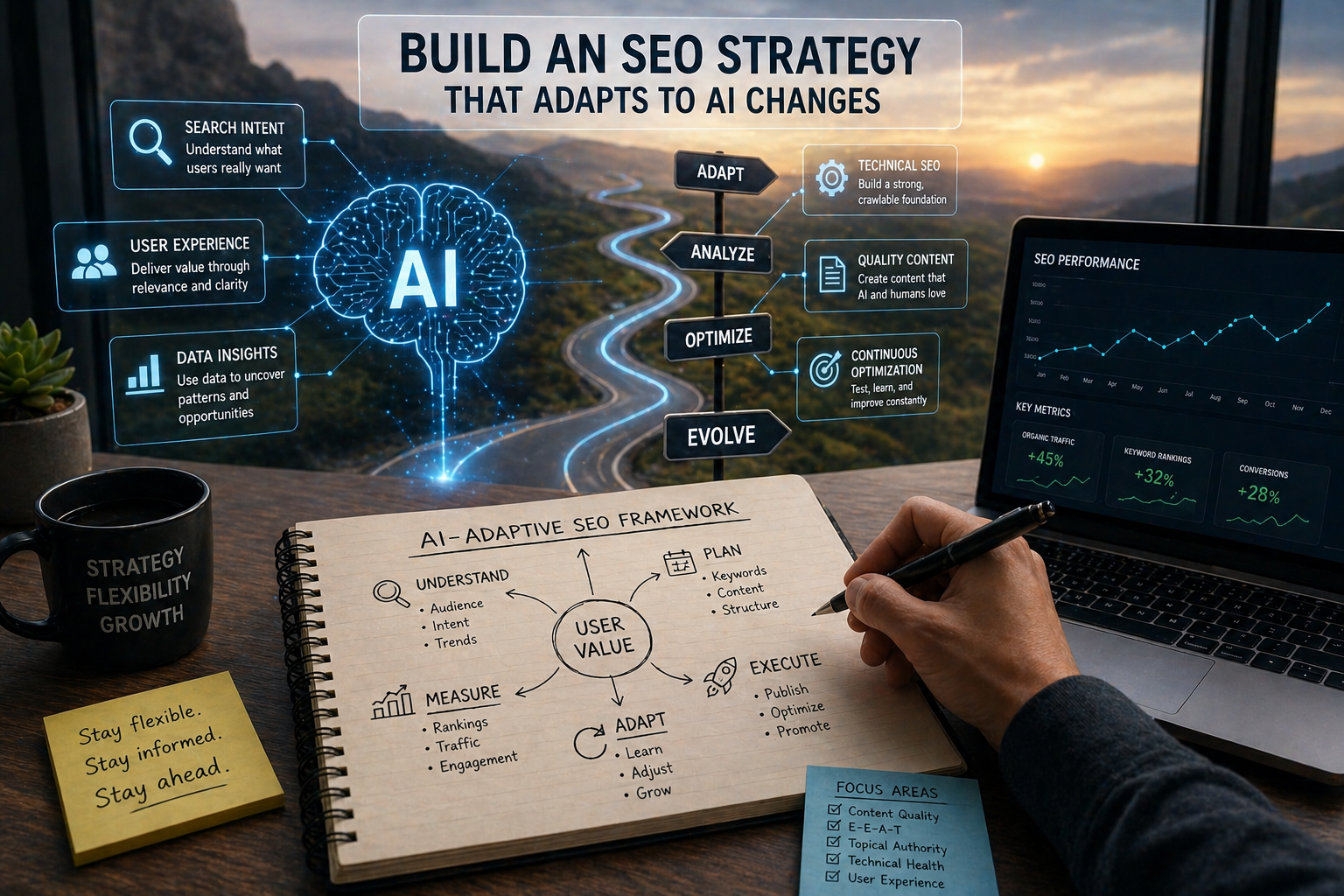
Google no longer ranks websites the way it did five years ago. It doesn’t just match keywords. It interprets meaning, relationships, credibility, and contextual signals. In 2026, the businesses dominating local search aren’t simply optimizing pages — they are building recognizable digital entities. That distinction is critical. If your strategy still revolves only around keyword density and backlinks, you are missing the deeper layer of Search Engine Optimization that now drives rankings.
Entity SEO represents the evolution of search. It focuses on how search engines understand your business as a defined, connected, and authoritative presence within a knowledge graph. For local businesses competing in tight geographic markets, this shift changes everything — from map pack visibility to AI-driven search results.
This guide breaks down what entity SEO truly means, why it has become foundational for local rankings in 2026, and how to build an entity-first optimization strategy that compounds over time.
Understanding What an Entity Is in Modern Search
An entity is not a keyword. It is a clearly defined concept that exists independently of language variations. In Google’s Knowledge Graph, entities can include:
- Businesses
- People
- Locations
- Organizations
- Products
- Services
For example, “Joe’s Roofing Atlanta” is an entity. It has a name, address, phone number, website, reviews, and connections to geographic and service-related entities. Google does not just read the words on your website — it identifies whether your business is a legitimate, recognized node in its structured ecosystem.
Entities are defined by attributes and relationships:
| Entity | Attributes | Relationships |
|---|---|---|
| Local Plumbing Company | Name, Address, Reviews, Services | City, Industry, Suppliers, Customers |
When Google trusts your entity, rankings become more stable and resilient to algorithm fluctuations.
The Shift From Keywords to Knowledge Graphs
Search engines have transitioned from string-based indexing to entity-based understanding. Previously, ranking depended heavily on:
- Exact keyword matches
- Anchor text patterns
- Page-level optimization
Now, Google evaluates:
- Topical authority clusters
- Semantic relationships
- Brand recognition signals
- Cross-platform consistency
In local markets, this matters because Google wants to show the most credible and contextually relevant business — not simply the page with the most keywords.
Entity SEO strengthens:
- Trust
- Authority
- Contextual alignment
- Relevance to geographic signals
This is why modern organic SEO strategies must incorporate structured entity building rather than isolated keyword campaigns.
Why Entity SEO Is Critical for Local Rankings in 2026
Local search results are influenced by proximity, relevance, and prominence. Entity strength directly impacts prominence.
Strong entities demonstrate:
- Consistent NAP information
- Robust review profiles
- Clear service associations
- Structured data markup
- High topical authority
AI-driven results and generative search experiences increasingly rely on entity confidence. If Google’s systems cannot clearly define your business as a trusted entity, your visibility will be suppressed in both map results and AI summaries.
How Structured Data Reinforces Entity Recognition
Schema markup plays a foundational role in entity SEO. By implementing structured data, you explicitly define:
- Business type
- Service areas
- Opening hours
- Review ratings
- Geographic coordinates
Structured data acts as confirmation signals. When schema aligns with Google Business Profile data and third-party citations, entity confidence increases.
The Role of Google Business Profile in Entity Authority
Your Google Business Profile is one of the most powerful entity validation tools available. It connects your business entity to:
- Physical location
- User reviews
- Service categories
- Photos and engagement
Consistent updates and engagement amplify entity prominence within local SEO ecosystems.
Topical Authority and Entity Depth
Entity SEO is not just about citations — it is about thematic depth. A roofing company that publishes:
- Storm damage guides
- Insurance claim processes
- Material comparisons
- Neighborhood-specific case studies
Strengthens its relationship to multiple related entities. The broader and deeper the coverage, the stronger the semantic web around your business.
Entity Consistency Across the Web
Discrepancies weaken entity clarity. Ensure:
- Uniform business naming
- Consistent address formatting
- Matching service descriptions
- Accurate categories everywhere
Inconsistent citations fragment entity signals, reducing trust.
How AI Search Amplifies Entity Importance
Generative search systems summarize entities rather than pages. Businesses with strong entity signals are more likely to:
- Appear in AI overviews
- Be cited in knowledge panels
- Show up in conversational queries
In 2026, entity clarity directly influences inclusion in AI-driven responses.
Building an Entity SEO Strategy for 2026
A modern strategy includes:
- Schema implementation
- Authority content clusters
- Reputation management systems
- Local citation strengthening
- Cross-platform consistency audits
This integrated model ensures your business is recognized, trusted, and contextually aligned within Google’s ecosystem.
Measuring Entity Strength and Local Impact
Track:
- Knowledge panel presence
- Map pack stability
- AI citation frequency
- Branded search volume growth
Stronger entities produce compounding visibility gains over time.
Positioning Your Business as a Recognized Local Authority
Entity SEO is not a tactic. It is infrastructure. Businesses that treat themselves as digital entities rather than keyword targets will dominate local rankings in 2026.
If your goal is to strengthen your business’s digital footprint, enhance authority signals, and create durable ranking power in competitive markets, GetPhound provides entity-focused strategies tailored for local market dominance.